Stadtrundgangs - Informationstafel "Glasproduktion"


Since the Middle Ages
Local glass production began in the 12th century with itinerant glassworks in the Eggegebirge mountains. The surrounding forests with their enormous wood reserves were of central importance. They provided the vast amounts of fuel needed for glass production: the wood was processed into charcoal in charcoal kilns, which was then used to fire the furnaces, for example. In addition to quartz sand and lead oxide, potash was also needed for the production of glass. Potash is a white salt that was obtained from wood ash by boiling and evaporating it several times. A traveling glassworks needed up to 30 hectares of forest per year just to produce potash. This resulted in large clear-cuts and the smelters had to keep looking for new locations. Potash, quartz sand and lead oxide were melted into glass in so-called "glass ports" (ceramic pots with a capacity of four liters each) at temperatures of around 1,200 °C in furnaces. The glass mass was then shaped by glassblowers.Since industrialization
When Driburg was connected to the railroad network in 1864, large quantities of hard coal could be transported from the Ruhr region. The itinerant glassworks in the forests had had their day. Now large glassworks
were able to set up near the railroad station. An initial phase of the death of glassworks began in the Weimar period due to the global economic crisis. Until the 1970s, many more glassworks went out of business. Unlike their
competitors, they had not switched to a fully automated production method, meaning that their business was no longer profitable. In 2013, the last manufacturing glassworks in Bad Driburg, "Waltherglas" in the district of Siebenstern, was
closed. However, the glass trade is still very important here (see information stele no. 2). Today, Bad Driburg is the largest transshipment point for glass products in Europe.
The history of the glass town of Bad Driburg is vividly presented here in the glass museum. It is well worth a visit.
Image sources: Unless otherwise indicated,
the illustrations originate from the archives of the town of Bad Driburg, Meiners, Herzog or Gehle.

Good to know
General information
Parking Available
Bus stop available
Payment methods
- Entrance Free
Directions & Parking facilities
- By car:
To get to the Bad Driburg Glass Museum, you can first take the B64, which leads through Westenfeldmark and Lange Straße until you reach Schulstraße. This route takes about 6 minutes and is approximately 5.1 kilometers long.
Then follow Schulstraße and turn into Glöcknergasse to get back onto Schulstraße. This route takes about 2 minutes and is about 350 meters long.
By bus:
If you take the S30 in the direction of Bad Driburg, Goeken Backen and get off at the "Bad Driburg, Pyrmonter Straße" stop, it is only about a 3-minute walk to the Bad Driburg Glass Museum. License (master data)
Madita Claes

Nearby



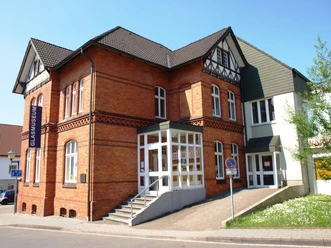


Photo Gallery