Eilhausen - Ortsteil Lübbecke


Mills dominate the landscape of the small community on the northern slope of the Wiehengebirge. In 1748, Prussian King Frederick II ordered the construction of what is now known as the Königsmühle (directly on the B 65), which, together with the miller's house, is regarded as Eilhausen's landmark and is one of the most beautiful and best-known of the 40 or so wind and water mills on the Westphalian Mill Route. For almost two centuries, grain was milled at the "Dutch windmill", which is turned in the right direction by the wind rose. After thorough renovation, the mill at the western entrance to the village has been operational again since 1994. In summer, the blades turn once a month when the mill group invites visitors to grinding and baking days. The mill ensemble, including a small village museum, shows how the technical achievements of the late 19th and early 20th centuries changed the professional and everyday life of a miller's family.
Somewhat further east on the B 65 is the watermill, also fully functional and restored (but no longer in operation), a small single-storey quarry stone building with a half-timbered gable, gabled roof and a water wheel with an upper shaft. Its origin is dated to 1698.
Somewhat further east on the B 65 is the watermill, also fully functional and restored (but no longer in operation), a small single-storey quarry stone building with a half-timbered gable, gabled roof and a water wheel with an upper shaft. Its origin is dated to 1698.
Good to know
License (master data)
Mühlenkreis Minden-Lübbecke

Nearby


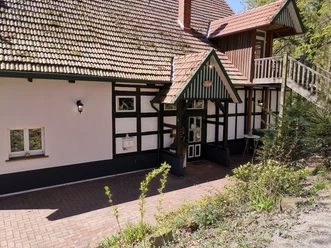
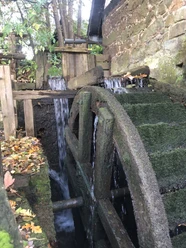
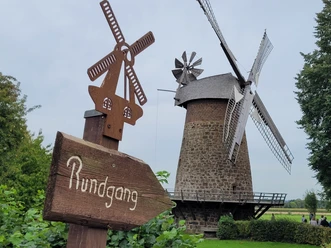



Photo Gallery