Werre

Rivers are both at the same time: a boundary and a connection.
The Werre has always played an important role in nature as a transport route: soil, substrate, fish spawn, plant seeds, and other animals on their migrations—the Werre has always sustained and nurtured life on both sides of its banks. Increasingly, however, the river was also perceived as an obstacle and a nuisance; floods made farming and settlement near the river difficult.
For a short time (1811–1813), the Werre served as the border between France and Westphalia. Farmers had to “smuggle” their harvests home—today, only municipal districts lie on either side of the river.
Further information: www.fahr-im-kreis.de

Good to know
Payment methods
- Entrance Free
Directions & Parking facilities
- The Werre is 71.9 kilometers long in total and flows from the Lipper Bergland to Bad Oeynhausen, where it empties into the Weser. It separates municipal areas such as Hiddenhausen and Löhne.
More information
- Always know what’s running—a toll-free number for any situation: By calling 08006 50 40 30, bus and train passengers in North Rhine-Westphalia can get fare information, schedule details, and more around the clock.
Nearby



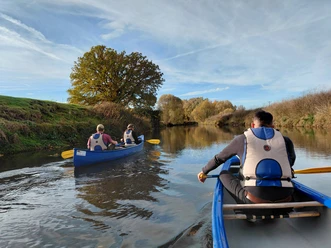


Photo Gallery