The advantages of such a monument were obvious. For one thing, it was inexpensive, if not free, to erect. Farmers were called upon to provide boulders of the desired size, which they then had to transport to the memorial site by means of the usual clamping services. There, again on a voluntary basis, the boulders were stacked and bricked up. Costs were only incurred for the dedication plaque or the emblem, but these were bearable, as the serially produced Bismarck or Kaiser portraits could be ordered from the catalog in various sizes at affordable prices. The result was always a monument that was as massive as it was representative, which fully satisfied the local declarations of allegiance to the nation.
The further concept envisaged that each of the 12 rural communities in the district would be represented with its name on a stone. The suggestion for this came from Herford, where a stone ensemble had been erected in honor of the von Borries family on 17 August 1900 to mark the inauguration of the new district hall. The district administrators of the Herford district had come from this family for several generations. The Borgholzhausen pyramid was to be adorned with reliefs of Emperor William II and Elector Johann Sigismund. However, the elector was missing from the offer from the Berlin bronze foundry Gladenbeck, and the foundry had also offered Wilhelm I instead of Wilhelm II. In a dispute with Amtmann Müller, the entire portrait commission was finally canceled, leaving only the Ravensberg spar coat of arms.

Eligibility
Suitable for any weather
Payment methods
- Entrance Free
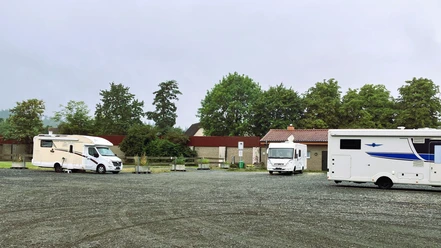
Directions & Parking facilities
- Foundling pyramid monument
You can reach the boulder pyramid via Bahnhofstraße, Freistraße and Ravensberger Straße.