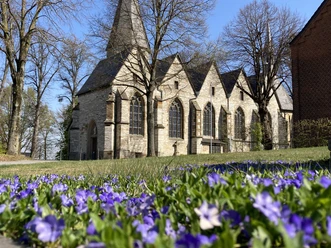
The church’s history also stretches far back in time. Around the year 1000, the first stone church was built on this site, and a Romanesque basilica was completed around 1175. Over the centuries, the church has been repeatedly expanded and remodeled. Inside, in addition to the miraculous image, visitors can see, among other things, a high altarpiece depicting the Crucifixion by Johann Georg Rudolphi from around 1670, as well as historic consecration gifts from the era when the pilgrimage was sponsored by the prince-bishops.
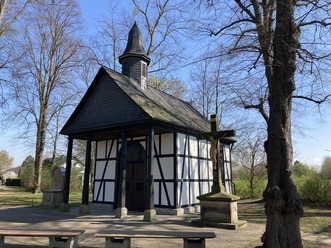
The pilgrimage comes alive especially during the weeks of May. On the first and third Sundays in May, processions carrying the miraculous image make their way to the Brünneken. On the second and fourth Sundays in May, Marian devotions take place there. The processions to the spring have a long tradition and trace their origins to the veneration of the water that springs from there and its connection to the miraculous image.
Even outside of the pilgrimage days, the church is worth a visit: the Baroque altar of Our Lady, the historic furnishings, and the miraculous image all tell the story of this pilgrimage site’s long history.