As early as the 16th century, there was an oil mill in Salzkotten on what is now Oelweg. Over the centuries, its use changed: in 1767, oil was pressed, groats were produced, and wood was sawed there; later, the mill served only as a grain mill. Operations ceased in 1863.
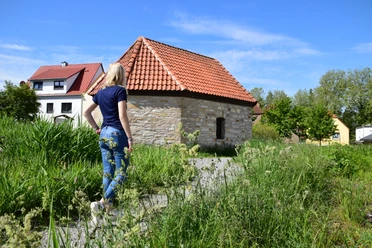
Many years later, a new oil mill was built in Franz-Kleine-Park. The Association for the Preservation of Cultural and Historical Buildings and Structures (Förderverein für kulturhistorische Bauten und Bauwerke e.V.) acquired the technical inner workings of an old oil mill from Wewelsburg and installed them in a new mill building. The characteristic millstone pair has been preserved to this day and can be seen in action during demonstrations.
The historic pressing mechanism also offers a glimpse into the technology of bygone eras. Two fixed wedges and a central release wedge ensure that the oil could be pressed out of the ground material. Such a design is now found only sporadically among oil mills, which are already rarely preserved.
Surrounding the oil mill are other historic workshops: a clog-making workshop, a bakehouse, and a wheelwright’s workshop with a blacksmith’s forge. Together, they offer insights into various crafts that were once part of daily life and work in the region.
Openings
- The oil mill is open every 1st Sunday of the month from April to October.
Further dates on request. Price info
- Price on request
General information
Bus stop available
Eligibility
Bad Weather Offer
Suitable for any weather
for Groups
for Class
for individual guests
Directions & Parking facilities
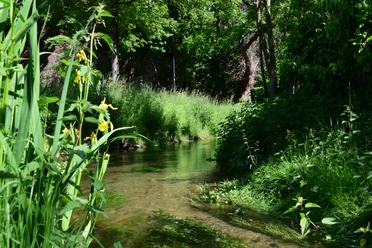
- The oil mill is located in the center of Salzkotten on the river Heder.
Social Media
License (master data)
lokaler Redakteur